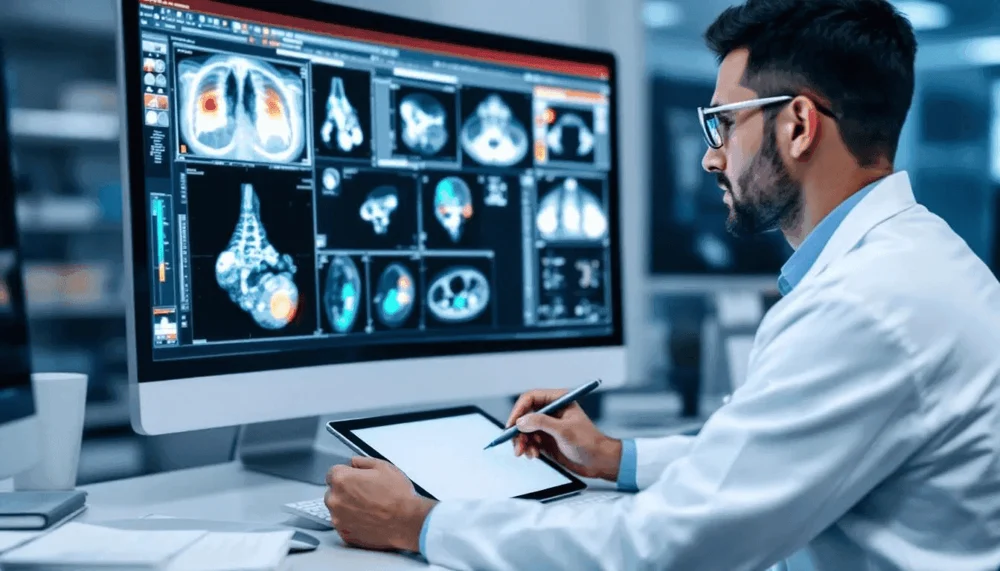
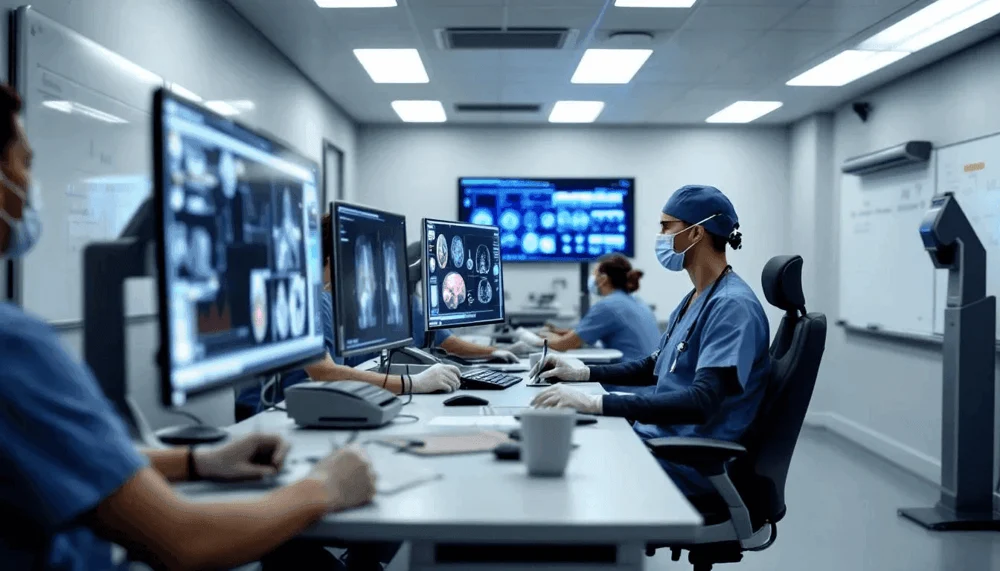
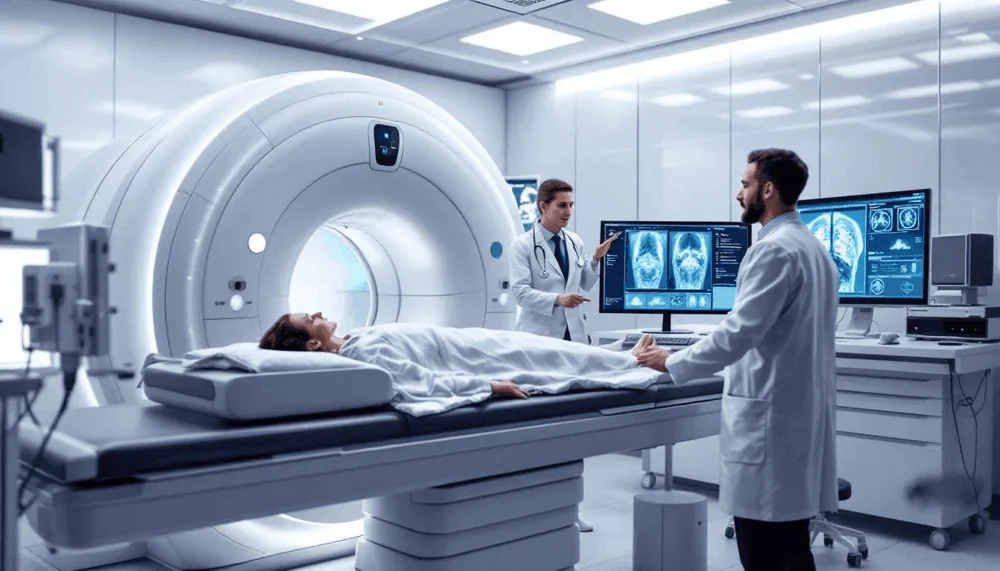
Artificial intelligence is rapidly transforming radiology, helping imaging centers and healthcare systems deliver faster, more accurate diagnostic reads. With the FDA clearing over 900 AI-enabled medical devices as of early 2026, the landscape of AI radiology companies has never been more competitive or more promising. Whether you run an independent imaging center or manage radiology operations at a hospital system, choosing the right AI partner can dramatically impact turnaround times, diagnostic accuracy, and revenue. In this guide, we break down the leading AI radiology companies, what differentiates them, and how to evaluate the best fit for your practice.
Why AI Radiology Companies Matter in 2026
Radiology has long faced a supply-demand imbalance. The growing volume of medical imaging studies, combined with a global shortage of radiologists, means that many practices struggle to deliver timely reads. AI radiology companies address this gap by offering software that can triage urgent cases, flag abnormalities, and even generate preliminary reports, allowing radiologists to focus their expertise where it matters most.
In 2026, several factors make AI adoption in radiology more urgent than ever. Rising imaging volumes from an aging population, increasing burnout among radiologists, and growing pressure from payers to reduce turnaround times all drive the need for AI-powered solutions. The most successful AI radiology companies combine FDA-cleared algorithms with seamless workflow integration to deliver measurable clinical and operational value.
Top AI Radiology Companies Transforming Medical Imaging
1. Natoe AI
Natoe AI stands out as a comprehensive AI-powered teleradiology platform that combines FDA-cleared diagnostic AI with board-certified radiologists. Unlike pure-software companies, Natoe delivers end-to-end radiology services including CT reads, MRI interpretation, X-ray analysis, mammography, and neuroradiology. Their AI copilot assists radiologists in real time, reducing turnaround times while maintaining diagnostic accuracy above 99%. For imaging centers seeking both AI technology and expert radiologist coverage, Natoe offers a uniquely integrated solution.
Key strengths: FDA-cleared AI copilot, 24/7 teleradiology coverage, sub-30-minute turnaround times, support for all major modalities including CT, MRI, X-ray, and mammography.
2. Aidoc
Aidoc focuses on AI-powered triage and workflow optimization for hospital radiology departments. Their platform analyzes CT scans in real time to flag critical findings such as pulmonary embolism, intracranial hemorrhage, and cervical spine fractures. Aidoc has built a strong presence in large health systems that need to prioritize urgent cases in high-volume environments.
Key strengths: Real-time CT triage, multiple FDA-cleared algorithms, strong hospital system adoption, worklist prioritization.
3. RadNet (DeepHealth)
RadNet acquired DeepHealth to integrate AI into their network of outpatient imaging centers. Their Enhanced Breast Cancer Detection (EBCD) program uses AI to improve mammography screening accuracy. As one of the largest outpatient imaging operators in the U.S., RadNet demonstrates how AI can scale across a large network of imaging facilities.
Key strengths: Mammography AI at scale, large imaging center network, real-world clinical validation across millions of exams.
4. Viz.ai
Viz.ai specializes in AI-powered care coordination, particularly for stroke and cardiovascular emergencies. Their platform detects large vessel occlusion strokes on CT angiography and automatically alerts the care team, reducing time to treatment. Viz has expanded beyond stroke to cover pulmonary embolism, aortic disease, and other time-sensitive conditions.
Key strengths: Stroke detection and care coordination, automated team alerts, strong clinical outcome data, expanding into cardiology.
5. Qure.ai
Qure.ai focuses on chest X-ray and head CT interpretation, with a strong presence in global health markets. Their AI solutions are designed to work in resource-limited settings, helping to expand radiology access in regions with few radiologists. Qure has processed over 30 million scans globally and holds multiple international regulatory clearances.
Key strengths: Chest X-ray AI, global market reach, affordable pricing for emerging markets, tuberculosis screening capabilities.
How to Evaluate AI Radiology Companies
Choosing the right AI radiology partner requires careful evaluation across several dimensions:
- FDA clearance status: Verify that the AI solution holds current FDA 510(k) clearance for the specific clinical applications you need. Not all AI products have the same regulatory status.
- Clinical validation: Look for peer-reviewed studies and real-world evidence demonstrating diagnostic accuracy, sensitivity, and specificity. Ask for outcome data from similar practice settings.
- Workflow integration: The best AI tools integrate seamlessly with your existing PACS, RIS, and EHR systems. Avoid solutions that require significant workflow changes or separate interfaces.
- Modality coverage: Consider whether you need AI for a single modality like mammography or comprehensive coverage across CT, MRI, X-ray, and ultrasound.
- Turnaround time impact: Quantify the expected improvement in report turnaround times. The most effective AI radiology companies can demonstrate measurable reductions in TAT.
- Pricing model: Understand whether pricing is per-study, per-radiologist, or subscription-based. Calculate the total cost of ownership including implementation, training, and ongoing support.
- Support and training: Evaluate the vendor's implementation support, training resources, and ongoing customer success programs. A strong partnership matters as much as the technology itself.
The Future of AI in Radiology
The AI radiology landscape continues to evolve rapidly. Several trends will shape the industry in the coming years. Multimodal AI systems that can analyze images alongside clinical notes and lab results will provide more comprehensive diagnostic support. Large language models integrated with imaging AI will generate more detailed and context-aware radiology reports. AI-powered teleradiology platforms like Natoe AI will make subspecialty expertise accessible to imaging centers of all sizes, regardless of location.
For imaging centers and radiology practices evaluating AI solutions, the key is to focus on measurable clinical and operational outcomes rather than technology for its own sake. The best AI radiology companies deliver tangible improvements in turnaround times, diagnostic accuracy, and radiologist satisfaction, while maintaining the highest standards of patient care.
Ready to see how AI-powered teleradiology can transform your imaging center? Request a demo from Natoe AI to experience FDA-cleared AI radiology in action.