The Rise of AI in Medical Imaging
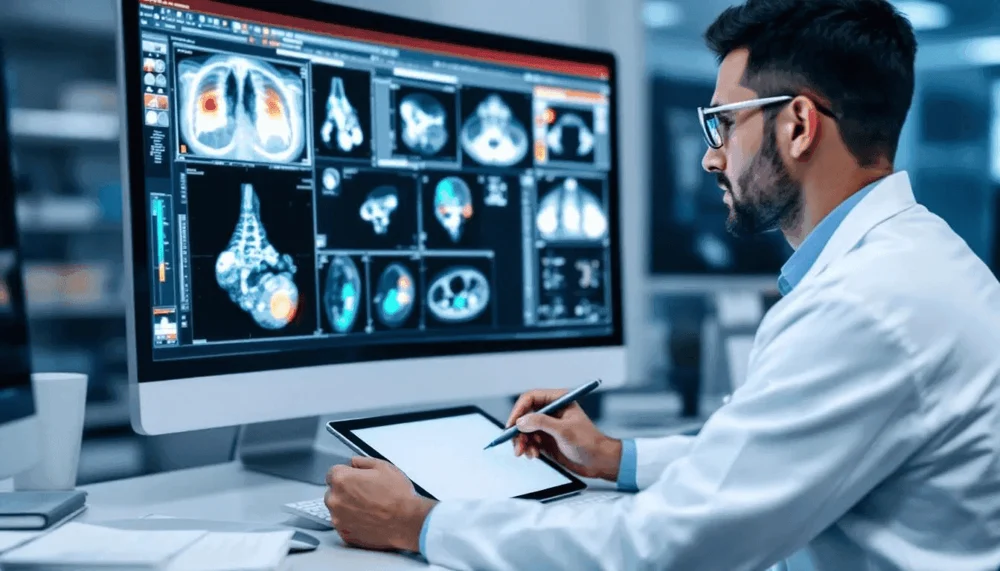
Artificial intelligence for medical imaging has rapidly evolved from an experimental concept to a clinical reality. Today, FDA-cleared AI tools assist radiologists in detecting abnormalities across CT scans, MRI studies, X-rays, and mammograms with unprecedented speed and accuracy.
For imaging centers and hospitals facing rising study volumes, staffing shortages, and pressure to reduce turnaround times, AI for medical imaging offers a transformative solution. This guide explores how AI is reshaping diagnostic imaging workflows and what healthcare leaders need to know before adopting these tools.
How AI for Medical Imaging Works
Modern AI medical imaging systems use deep learning algorithms trained on millions of annotated medical images. These algorithms can:
- Detect abnormalities — Identify findings such as lung nodules, intracranial hemorrhages, fractures, and suspicious masses that may be subtle or easily overlooked
- Prioritize urgent cases — Automatically flag critical findings and route them to the top of the worklist, reducing time-to-diagnosis for stroke, PE, and trauma cases
- Quantify measurements — Provide precise volumetric measurements, lesion tracking, and comparison with prior studies
- Reduce false negatives — Serve as a second reader to catch findings that might be missed during high-volume reading sessions
Unlike earlier computer-aided detection (CAD) systems, today's AI solutions leverage convolutional neural networks (CNNs) and transformer architectures that continuously improve with more data.
Key Applications Across Imaging Modalities
CT Scan AI Analysis
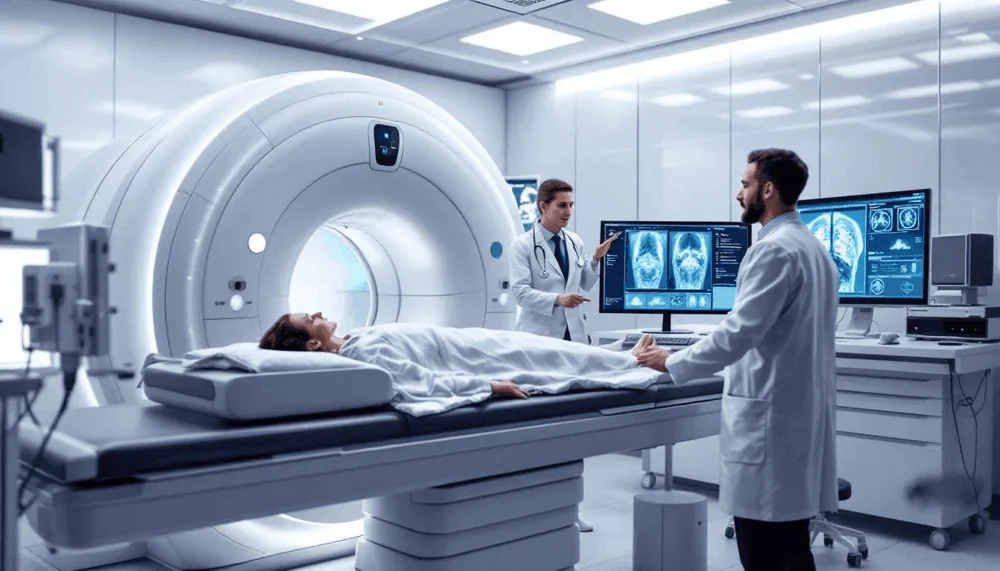
AI excels in CT imaging for detecting pulmonary embolism, lung nodules, liver lesions, and coronary artery calcification. Automated triage algorithms can flag emergent findings within seconds of image acquisition, enabling faster clinical intervention.
MRI AI Analysis
In MRI, AI assists with brain tumor segmentation, multiple sclerosis lesion detection, cardiac function analysis, and knee injury classification. AI-powered reconstruction techniques also reduce scan times by up to 50% without sacrificing image quality.
X-ray AI Analysis
Chest X-ray AI is one of the most mature applications, with FDA-cleared algorithms for pneumothorax detection, cardiomegaly assessment, rib fracture identification, and tuberculosis screening. These tools are especially valuable in emergency departments and urgent care settings.
Mammography AI
AI for mammography enhances breast cancer screening by identifying suspicious calcifications and masses, reducing recall rates, and improving cancer detection rates. Studies show AI-assisted mammography can match or exceed the performance of double reading by two radiologists.
Benefits for Imaging Centers and Hospitals
Faster Turnaround Times
AI-powered triage and automated preliminary reads can reduce report turnaround from hours to minutes. Natoe offers STAT reports within one hour and routine reports the same day, within the agreed coverage and reading hours.
Improved Diagnostic Accuracy
AI serves as an always-alert second reader, reducing missed findings by up to 30%. This is particularly valuable during overnight shifts, high-volume periods, and when subspecialty expertise is limited.
Cost Reduction
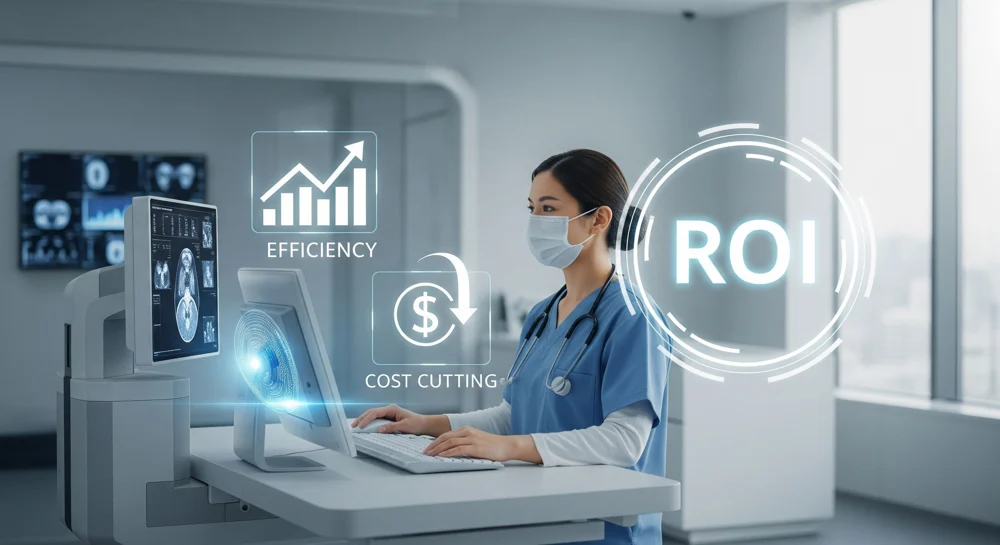
By automating routine tasks and optimizing radiologist workflows, AI can reduce operational costs by 20-40%. Imaging centers can handle higher volumes without proportionally increasing staffing costs.
Addressing the Radiologist Shortage
With the U.S. facing a projected shortage of 10,000+ radiologists by 2030, AI augmentation helps existing radiologists maintain quality while managing increasing workloads.
Choosing an AI Medical Imaging Solution
When evaluating AI for medical imaging platforms, consider these critical factors:
- FDA clearance — Ensure the solution has 510(k) clearance for each intended use case
- Integration — Look for PACS-native integration that fits seamlessly into existing workflows
- Clinical validation — Review peer-reviewed studies demonstrating real-world performance
- Subspecialty coverage — Evaluate whether the platform covers your key modalities (CT, MRI, X-ray, mammography)
- Turnaround time guarantees — Assess SLA commitments for preliminary and final reads
- HIPAA compliance — Verify SOC 2 Type II certification and comprehensive data security measures
- Scalability — Confirm the platform can handle your current and projected study volumes
Why Imaging Centers Choose Natoe AI
Natoe AI combines FDA-cleared AI algorithms with board-certified radiologist expertise to deliver a comprehensive teleradiology solution. Our platform offers:
- AI-assisted reads across CT, MRI, X-ray, and mammography
- Sub-2-hour turnaround for routine studies, sub-30-minute for critical findings
- Seamless PACS integration with major vendors
- 24/7 coverage including nights, weekends, and holidays
- Board-certified subspecialty radiologists for complex cases
- SOC 2 Type II certified, fully HIPAA-compliant infrastructure
Getting Started with AI Medical Imaging
The transition to AI-enhanced imaging doesn't have to be disruptive. Start with a pilot program focused on your highest-volume or most time-sensitive modality. Measure the impact on turnaround times, diagnostic accuracy, and radiologist satisfaction before expanding to additional use cases.
Request a demo to see how Natoe AI's platform can transform your imaging center's workflow with FDA-cleared AI technology.