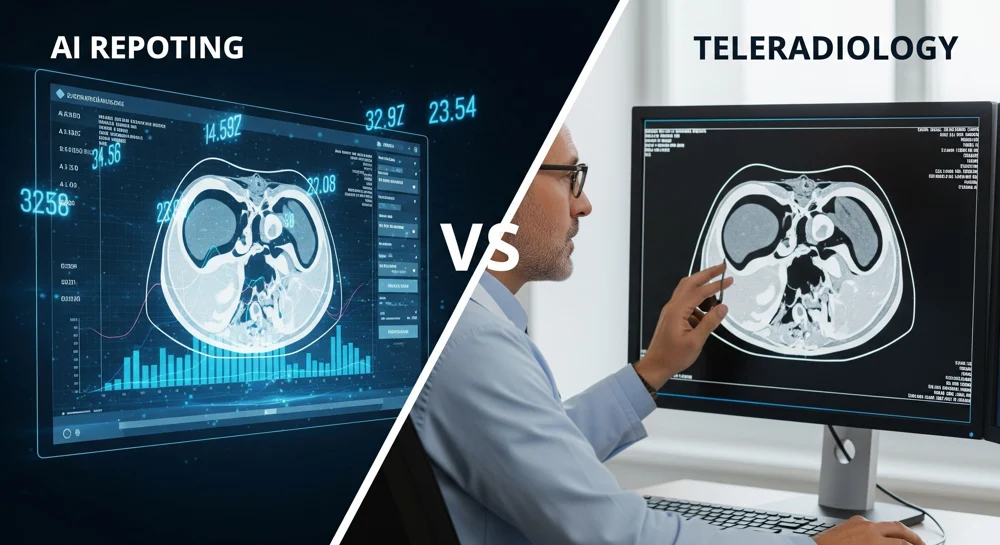
Radiology burnout is not a soft problem. A 2023 Medscape Physician Burnout survey found that 43% of radiologists reported burnout — one of the highest rates of any physician specialty. High read volumes, after-hours call responsibilities, increasing complexity, and declining reimbursement are all contributing factors. And the consequences are real: burned-out radiologists make more errors, leave the profession earlier, and report lower job satisfaction.
What's Driving the Volume Problem
Imaging volume in the US has increased dramatically over the past decade without a commensurate increase in the radiologist workforce. The result: many radiologists are reading 80–100 studies per shift in community settings, with limited decision support and high cognitive load. Overnight and weekend call adds further pressure. Without structural relief, burnout is an inevitable outcome.
How AI Teleradiology Reduces Radiologist Workload
- 35% average workload reduction AI pre-screening and automated report templating reduces the cognitive and administrative burden on radiologists. Natoe AI platform data shows a 35% reduction in effective per-study effort for radiologists using AI assistance.
- Critical finding triage AI automatically flags high-priority studies — pneumothorax, intracranial hemorrhage, PE — so radiologists can address the most urgent cases first rather than working through a linear queue.
- Structured reporting automation AI generates pre-populated report templates from image analysis, eliminating the repetitive dictation burden that drives a significant portion of radiologist time. Radiologists review, correct, and sign — not start from blank.
- Remote flexibility Teleradiology allows radiologists to work from anywhere, eliminating hospital commutes and enabling more sustainable work arrangements. Many radiologists report improved work-life balance after transitioning to remote reading.
The Radiologist Shortage Multiplier Effect
Burnout and the radiologist shortage are not separate problems — they amplify each other. As experienced radiologists leave the workforce early due to burnout, the remaining radiologists face higher volumes, increasing burnout risk in turn. AI teleradiology platforms are a structural intervention: by reducing per-study effort, they allow the existing radiologist workforce to serve more patients sustainably.
What Imaging Centers Can Do
If your in-house radiologists are showing signs of burnout — increasing TAT, declining report quality, or simply expressing dissatisfaction — teleradiology is a proven relief valve. Outsourcing overflow reads, overnight call, and weekend coverage to AI-enhanced teleradiology services can materially reduce the burden on your in-house team. The result: better radiologist retention, better diagnostic quality, and a more sustainable practice.