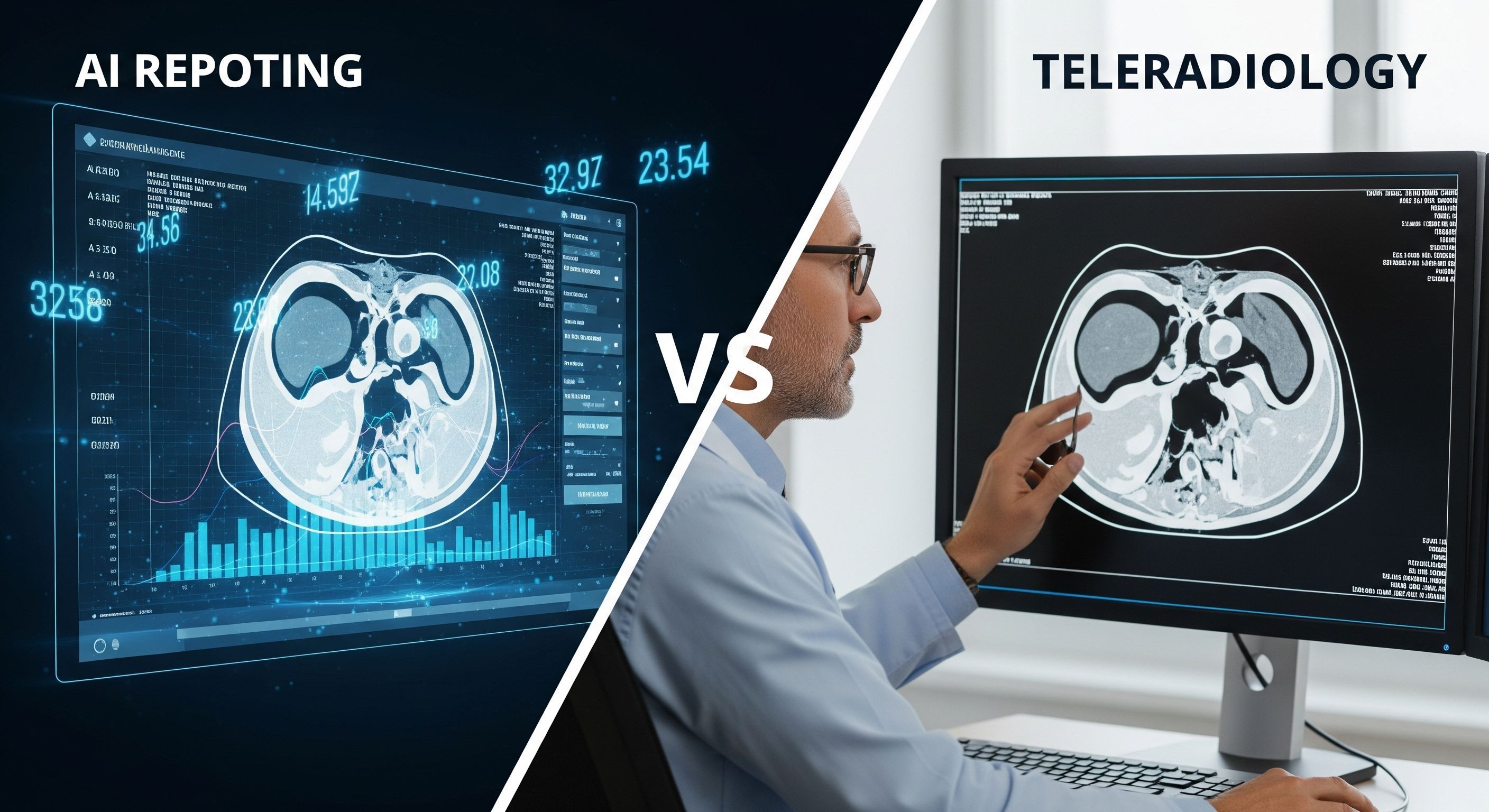
Outsource Radiology vs In-House: Cost Comparison
Reviewed by board-certified radiologists

One of the biggest strategic decisions an independent imaging center makes is whether to staff in-house radiologists or outsource to teleradiology. There's no universally right answer — but there are concrete financial and operational facts that should drive the decision. Here's the complete comparison.
The True Cost of an In-House Radiologist
The total cost of an in-house radiologist extends well beyond salary. A full breakdown for a single board-certified radiologist in the US:
| Cost Component | Annual Estimate |
|---|---|
| Base salary | $400,000 – $600,000 |
| Benefits (health, dental, retirement) | $60,000 – $90,000 |
| Malpractice insurance | $20,000 – $40,000 |
| CME and licensing | $5,000 – $10,000 |
| Recruitment / agency fees (amortized) | $15,000 – $30,000 |
| Overtime / locum cover for vacation | $30,000 – $60,000 |
| Total fully-loaded cost | $530,000 – $830,000/year |
What Teleradiology Actually Costs
Teleradiology pricing models vary: per-read pricing (pay only for studies interpreted) and monthly subscription pricing (fixed fee for a defined volume). For most independent imaging centers reading 500–2,000 studies per month, total monthly teleradiology spend is typically $15,000–$60,000 — or $180,000–$720,000 annualized. Critically, this includes 24/7 coverage, PACS integration, STAT capability, and subspecialty reads with no additional staffing cost.
Coverage: The Hidden Advantage of Teleradiology
A single in-house radiologist provides coverage during business hours, 5 days per week. Overnight, weekends, and holidays require additional locum coverage or after-hours call arrangements — both expensive and difficult to manage. Teleradiology provides 24/7/365 coverage as a standard component of the service, at no additional per-hour cost.
When In-House Makes Sense
- Volume above 5,000 studies/month: At very high volumes, the economics of teleradiology shift. High-volume centers often find hybrid models (in-house for daytime routine + teleradiology for after-hours and overflow) most cost-effective.
- Strong subspecialty focus: If your center specializes in a single modality (e.g., interventional radiology, breast imaging), a dedicated in-house subspecialist may provide a service level difficult to match with generalist teleradiology.
- Tight physician relationship requirements: Some centers require radiologists to be physically present for consultations, procedures, or relationship-building with referring physicians. Teleradiology is not a substitute for a face-to-face physician presence.
The Verdict for Most Independent Imaging Centers
For independent imaging centers reading under 3,000 studies per month, AI-enhanced teleradiology is almost always the more cost-effective choice — typically saving 40–60% vs. fully-loaded in-house costs while providing superior coverage and scalability. The decision should be made on your actual numbers, not assumptions. Natoe AI provides free cost comparison analyses for imaging centers considering the switch.