How Radiology AI Boosts Efficiency & Accuracy
Reviewed by board-certified radiologists

Introduction
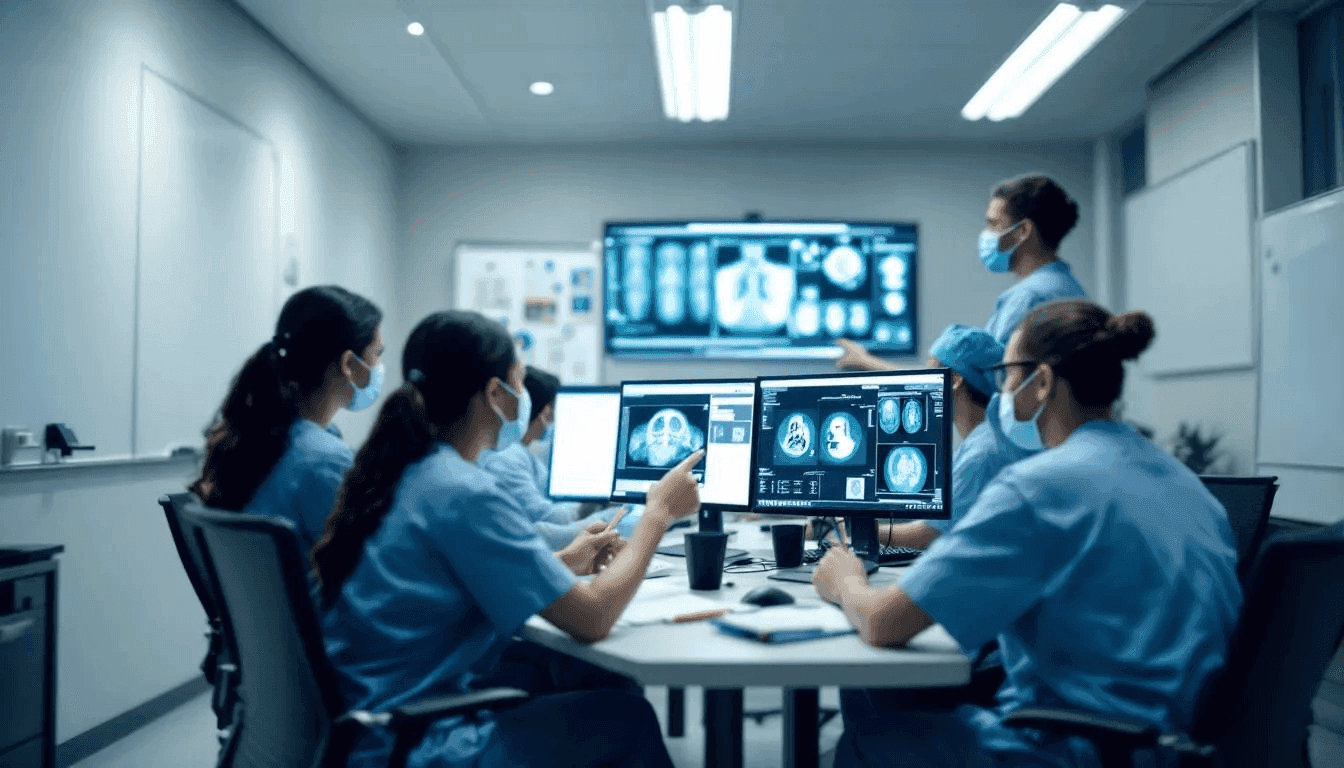
Picture a radiology department buzzing with activity: scanners whirring, screens glowing with images, and radiologists racing to keep up with a flood of CTs, MRIs, and X-rays. The demand for diagnostic imaging is surging, but the number of radiologists isn't growing fast enough to match it. This mismatch creates delays, frustrated patients, and overworked doctors, with errors creeping in as fatigue sets in. For imaging centers and diagnostic centers, these bottlenecks erode patient satisfaction and strain operations. Artificial intelligence (AI), particularly radiology AI solutions, is stepping in as a game-changer, boosting efficiency and accuracy with tools that streamline workflows and sharpen diagnoses. Let's explore how AI is transforming the field, offering solutions for radiologists and imaging centers, backed by compelling research and real-world examples.
The Crisis in Modern Radiology: Overcoming High Volume and Burnout
Radiology is under siege. The volume of imaging studies is climbing—think millions of scans annually, with CT and MRI use in Taiwan alone jumping over 3.5 times from 2000 to 2020 [1]. Yet, the supply of specialists lags behind, with a 15-20% shortage in the U.S. [2]. This imbalance means radiologists are swamped, interpreting hundreds of images daily—sometimes one every 3–4 seconds in an 8-hour shift [3]. The result? Delays in reporting, anxious patients waiting for results, and a higher risk of diagnostic errors due to exhaustion. This growing issue of radiologist burnout frustrates clinicians and patients alike, while diagnostic centers struggle to maintain quality under pressure.
Understanding the Radiologist Shortage and Workload Demands
The root cause is straightforward but daunting. An aging population and advances in diagnostic technology are driving a boom in imaging studies, far outpacing the growth of trained radiologists. In the U.S., the average radiologist's workload rose 34% from 1991 to 2007, reaching 14,900 procedures per year [4]. Globally, radiologist shortages exacerbate the problem, especially in resource-limited areas. Fatigue from long hours and repetitive tasks further compounds the issue, increasing the likelihood of diagnostic oversights. This perfect storm of rising demand and limited resources creates bottlenecks that radiology practices can't easily overcome without innovative AI tools for radiologists.
How AI Solutions are Driving a Revolution in Radiology
AI, powered by machine learning and deep learning, is transforming radiology by automating routine tasks, speeding up workflows, and enhancing diagnostic precision. Here's how these solutions are making a difference:
- Boosting Efficiency with AI Radiology Workflow Automation: One of the most significant impacts of AI is through radiology workflow automation. AI tackles time-consuming tasks like image analysis and triaging, allowing radiologists to focus on complex cases. A landmark study found an AI system slashed chest X-ray interpretation time from 11.2 days to 2.7 days for critical findings [5]. Another tool, TimeLens, cut examination time by 40% per finding [6]. A meta-analysis of 48 studies confirmed AI's impact, with 22 out of 33 time-related studies showing significant reductions in task completion time [7]. For imaging centers, this efficiency directly helps improve imaging center ROI through faster reporting and optimized scanner use.
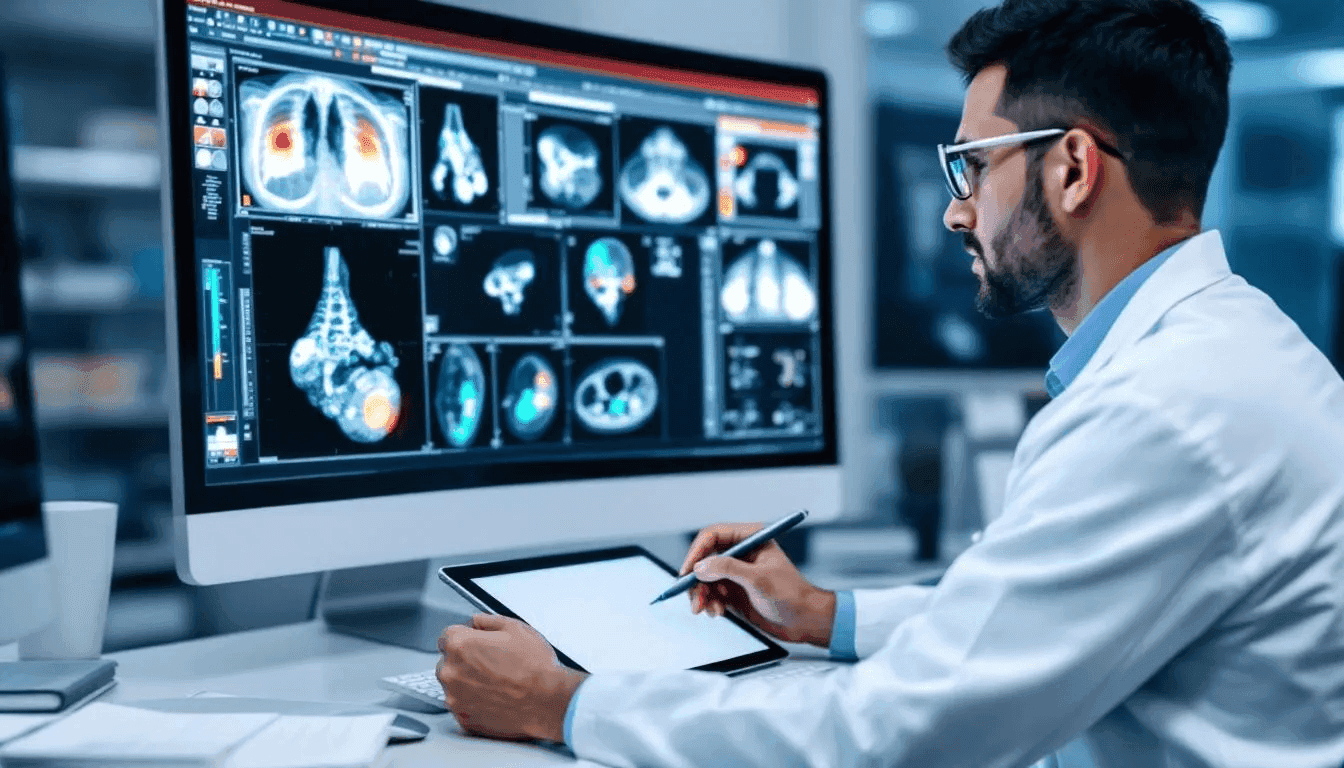
- Enhancing Diagnostic Accuracy with AI Medical Image Analysis: Modern AI diagnostic tools don't just save time—they sharpen diagnoses. The core of this is advanced AI medical image analysis. In lung nodule detection, an AI model achieved a 94.4% AUROC, outperforming six radiologists [8]. In mammography, AI reduced false positives by 69% for microcalcifications, boosting diagnostic confidence [9]. Another study showed AI matching human performance in mammography screening [10]. These gains help imaging centers deliver reliable results, reducing the need for follow-up scans and enhancing patient trust.
- Reducing Radiologist Burnout and Workload with Smart AI Tools: By automating routine tasks like triaging and preliminary reporting through AI assisted radiology reporting, smart AI tools significantly lighten the load. One study reported AI cut case reading time by 17%, freeing up valuable time for critical tasks or rest [11]. This workload reduction is a direct strategy to reduce radiologist burnout, a major issue with 88% of radiologists reporting high stress levels [12]. A less stressed workforce means better retention and consistent service quality for diagnostic centers.
Real-World Impact: AI in Clinical Practice
Consider a hospital using an AI radiology platform to triage head CTs. By prioritizing critical findings like hemorrhages, it reduced reporting time from 8.5 hours to 19 minutes, improving patient outcomes [13]. Another center adopted AI for mammography, cutting reading times and enabling 20% more daily scans without extra staff [14]. These examples show the tangible benefits of integrating AI into daily practice.
Practical Considerations for Adopting Radiology AI
AI isn't a plug-and-play solution. It requires investment, training, and careful radiology AI integration with existing systems like PACS and RIS. Data quality is critical, and regulatory approvals, like seeking FDA-cleared AI radiology tools, are essential for ensuring safety. Still, with 48% of U.S. radiology practices already using AI, adoption is gaining momentum [15].
Conclusion: The Future is an AI-Augmented Radiologist
AI in radiology is revolutionizing the field by enhancing efficiency, improving accuracy, reducing workloads, and elevating patient care. With the power to cut reporting times and sharpen diagnoses, AI offers a lifeline for imaging centers facing rising demand. The evidence is clear: the benefits are real and growing. The future isn't about replacing radiologists; it's about empowering them with tools like an AI copilot for radiology that handle repetitive tasks, allowing them to focus on what they do best. Radiologists and administrators should explore these solutions to stay ahead, ensuring sustainable, high-quality care in an evolving field.